
00:00:00 Candid Cross · Interviews, checked live.
Answers, with the checking printed.
How long interviews are asked, heard, checked and transcribed, with the checking shown on the page. 210 evergreen explainers across 8 desks, and a live check you can run yourself.
- Explainers
- 210
- Desks
- 8
- Read aloud, the archive runs
- 03:56:32
Signature piece
The live check
Read a short interview the way a checker hears it. Switch each kind of mark on or off, tap any mark for what a checker would do next, or run it as if it were live.
Illustrative transcript. Fictional speakers, a fictional community garden; no real claims are being checked.
- 00:00:08Interviewer
Thanks for making the time. Start at the beginning: how did the garden come about?
- 00:00:15Guest
It started on an empty lot behind the library. , and came to the first working bee.
- 00:00:42Interviewer
- 00:00:47Guest
I think people love it.
- 00:01:06Interviewer
- 00:01:12Guest
- 00:01:31Interviewer
Coming back to the cost for a moment. Who pays the water bill?
- 00:01:35Guest
chip in.
- 00:01:53Interviewer
What was the funding question?
- 00:01:57Guest
, so it is all there.
10 marks raised in two minutes of talk.
- AaCheckable claim. A statement of fact that a record could confirm or contradict.
- AaVague quantifier. A word that sounds like a number but carries none.
- AaAnswer shift. The reply answers a different, easier question.
- AaLeading or stacked question. The question itself tilts or crowds the answer. Checks cut both ways.
- AaFollow-up opening. A loose thread the interviewer can pull next.
The format
Four moves, every interview
Listen, flag, check, print. The same discipline behind a live check, slowed down so you can see each move.
-
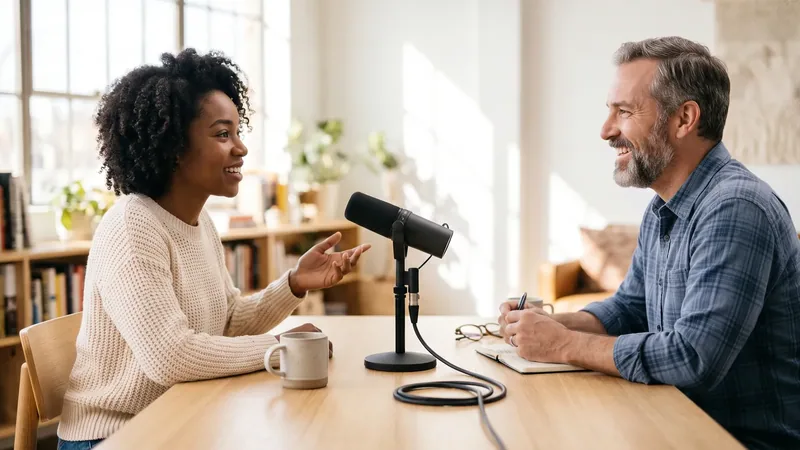
01Listen
Hear the whole answer before reaching for the next question. Most of what needs checking arrives in passing.
The Basics of Active Listening -
02Flag
Mark the moment, not the person: a claim with a record behind it, a vague number, an answer to a different question.
Listening for Claims Worth Checking Later -
03Check
Go to the record itself. Minutes, accounts, the recording, the original document. A second source is not a summary of the first.
The Duty to Check a Claim -

04Print
Publish the answer with the checking beside it, and keep the quote's meaning intact when you trim it.
Editing a Quote Without Changing Its Meaning
Running order
The eight desks
The archive as a rundown. Each desk starts where the last one would end if you read the whole archive aloud, at 150 words a minute.
- 00:00:00 26 explainers 00:28:32
- 00:28:32 26 explainers 00:30:12
- 00:58:44 26 explainers 00:28:20
- 01:27:04 26 explainers 00:28:34
- 01:55:38 27 explainers 00:30:29
- 02:26:07 26 explainers 00:28:22
- 02:54:30 27 explainers 00:34:16
- 03:28:45 26 explainers 00:27:47
Total running time 03:56:32. Search and filter all 210 explainers
Two cameras
Every cut is a choice
A wide shot shows the room and both people in it. A close shot shows a face while it answers. Which one runs at the moment a claim is made changes what an audience notices, which is why an honest edit keeps the question and the answer together.
From the archive
One clip from every desk
Each card shows how long the piece runs read aloud.
- Ethics of the chair01:03 Consent and the Right to DeclineAn interview is a voluntary exchange, and that voluntary quality is easy to erode without anyone quite intending it: through social pressure, through...
- Famous formats01:15 The Exit InterviewThe exit interview sits at an unusual moment: someone is leaving a role or an organisation and has, at least in theory, less to lose by speaking...
- Interview history01:05 The Newspaper Origins of the InterviewThe interview as a recognisable published form grew alongside the wider newspaper press, as editors realised that a subject's own words, quoted...
- Listening technique01:17 The Basics of Active ListeningActive listening is less a technique than a posture: giving full attention to what is being said, rather than dividing that attention between...
- Preparing well01:16 Researching a Subject Before the Sit DownArriving with a genuine understanding of a subject's background changes the entire tone of an interview. It allows questions to start from where the...
- Reading answers01:15 Reading Between the LinesEvery answer carries two layers: the plain content of what was said, and the shape of how it was said, which often tells a different and more...
- The craft of questions01:19 Open Questions Versus Closed QuestionsA closed question asks for a fact and receives one: a date, a yes, a number confirmed. An open question asks for a world and receives a story. The...
- Transcription craft01:03 Verbatim Versus Clean TranscriptionA verbatim transcript captures every stumble, repetition, and half finished sentence exactly as spoken, preserving the texture of real speech at the...